

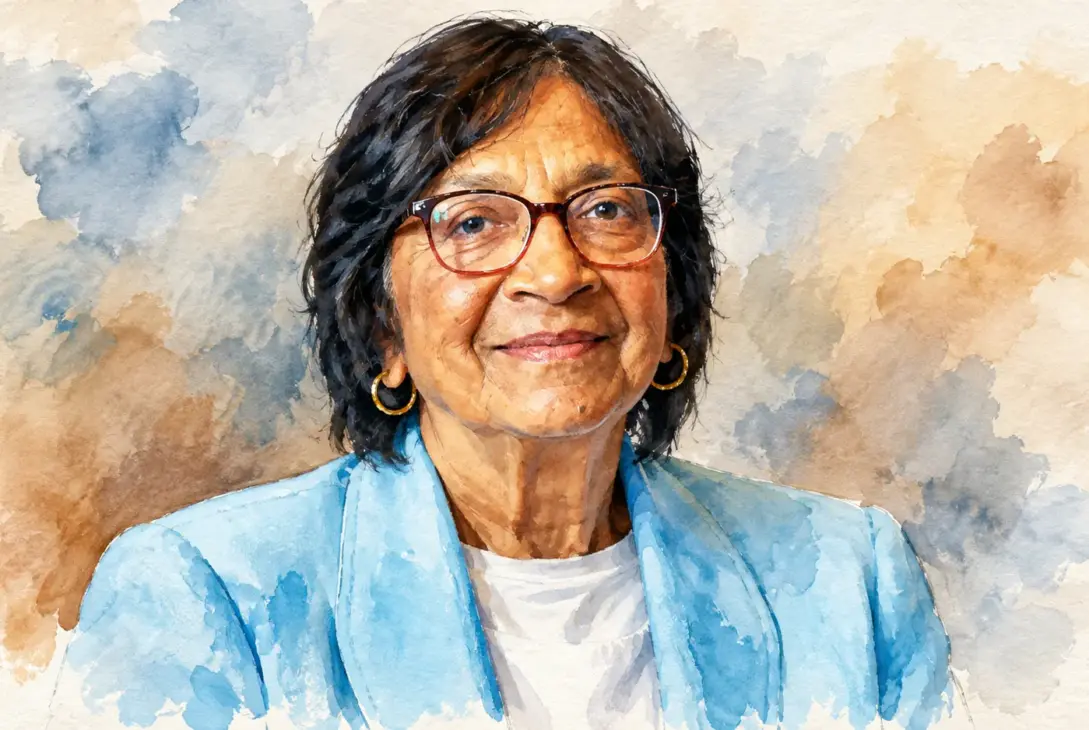
Nelson Mandela spent 27 years in prison fighting against apartheid in South Africa. But did you know that a young lawyer named Navi Pillay played a role in securing better conditions for political prisoners on Robben Island, where Mandela was imprisoned?
At a time when standing up against South Africa’s apartheid government could put your own safety at risk, Pillay chose to fight for justice through the law.
Decades later, that same lawyer has won the Nobel Peace Prize 2026 for her lifelong efforts to promote peace and international law.
But who exactly is Navi Pillay? How did a woman of Indian origin become one of the world’s most influential human rights lawyers? And what makes her journey so extraordinary?
Answer Capsule:
Navi Pillay won the Nobel Peace Prize 2026 for her lifelong efforts to promote peace, human rights, and international law. Born in South Africa to a family of Indian origin, she fought for the rights of political prisoners during apartheid, served as a judge at international criminal courts, and became the UN High Commissioner for Human Rights.
10 Things You Should Know About Nobel Peace Prize 2026 Winner Navi Pillay
1. A Little From Her Childhood
Navi Pillay was born into a working-class family in Durban, South Africa. Her father worked as a bus driver, and the family had limited financial resources. Growing up under apartheid, she experienced racial discrimination from an early age. Despite these challenges, she was determined to pursue higher education.
Her family couldn’t afford to pay for her university education. But people in her local Indian community recognised her potential and raised money to help her study law at the University of Natal. Their financial support helped her begin a career that would eventually take her to some of the world’s most important international courts.
Years later, the same girl who needed her community’s help to attend university became Nobel Peace Prize 2026 winner Navi Pillay. Her journey shows how access to education and support from ordinary people can change someone’s life.
2. She Fought for the Rights of Nelson Mandela and Other Political Prisoners
Her full name is Navanethem Pillay, but the world knows her as Navi Pillay. She was born on September 23, 1941, in Durban, South Africa, to a Tamil family of Indian descent. Although she was born and raised in South Africa, her family roots trace back to India.
In 1967, she became the first woman to establish a law practice in South Africa’s Natal Province. During apartheid, when the government enforced racial segregation and denied basic rights to non-white citizens, Pillay defended political prisoners and people accused of opposing the government. She also challenged the authorities over allegations of torture and mistreatment in detention.
One of her most significant achievements was helping secure better conditions for political prisoners on Robben Island, where Nelson Mandela was imprisoned. Her legal efforts contributed to prisoners gaining important rights, including access to lawyers. However, she was not Mandela’s personal defence lawyer, an important distinction. Her work helped protect the rights of prisoners like Mandela during one of South Africa’s darkest periods.
3. Nelson Mandela Appointed Her as South Africa’s First Woman of Colour High Court Judge
In 1995, Nelson Mandela, who had become South Africa’s first Black president just a year earlier, nominated Navi Pillay to the High Court of South Africa. With this appointment, she became the first woman of colour to serve as a judge on the country’s High Court.
This was a major achievement because, under apartheid, non-white South Africans faced severe discrimination in education, employment, and the legal system. For decades, the judiciary had been dominated by white men. Pillay’s appointment marked an important step towards making South Africa’s courts more representative.
Interestingly, Navi Pillay served on the High Court for only a short period before moving to an international role. Later in 1995, she was elected as a judge at the International Criminal Tribunal for Rwanda, where she would help deliver justice for some of the world’s most horrific crimes.
4. She Helped Deliver Justice After the Rwandan Genocide
In 1994, Rwanda witnessed one of the worst genocides in modern history. Over approximately 100 days, an estimated 800,000 people, mostly from the Tutsi community, were killed. In 1995, Navi Pillay became a judge at the International Criminal Tribunal for Rwanda (ICTR), a United Nations court established to prosecute those responsible for the atrocities.
One of her most important contributions came in the historic 1998 Akayesu case. Pillay was part of the judicial panel that ruled that rape and sexual violence could constitute acts of genocide when committed with the intent to destroy a protected group. This was a major development in international law because sexual violence had often been overlooked in earlier war crimes prosecutions.
Navi Pillay later served as President of the tribunal from 1999 to 2003. Her work helped establish an important legal precedent for prosecuting sexual violence during conflicts, making it a significant chapter in the career of the Nobel Peace Prize 2026 winner.
5. She Became One of the First Judges of the International Criminal Court
In 2003, Navi Pillay became one of the first 18 judges elected to the International Criminal Court (ICC) in The Hague, Netherlands. The ICC was established to prosecute individuals accused of serious international crimes, including genocide, war crimes, crimes against humanity, and the crime of aggression.
Unlike the Rwanda tribunal, which was created to investigate crimes committed during a specific conflict, the ICC was designed as a permanent international court. Pillay served in its Appeals Division, where judges review legal decisions made in earlier proceedings. Her experience with the Rwanda tribunal made her an important part of the court’s early development.
She served at the ICC until 2008, when she left to take up another major international responsibility. By then, Navi Pillay had spent more than a decade working in international criminal justice, helping strengthen legal systems designed to hold individuals accountable for serious human rights violations.
6. She Became the UN’s Top Human Rights Official
Imagine having a job where you have to question some of the world’s most powerful governments when they violate people’s rights. That’s exactly what Navi Pillay did when she became the United Nations High Commissioner for Human Rights in September 2008.
For the next six years, she spoke up about issues that many governments would rather avoid. From civilian deaths during Syria’s civil war to allegations of human rights violations in Sri Lanka, she pushed for investigations and demanded answers. And she didn’t hesitate to criticise governments when she believed they were failing to protect people.
But her work wasn’t limited to wars. She also fought against discrimination based on gender, race, religion, and sexual orientation. Whether it was women’s rights or the rights of minority communities, Navi Pillay believed that basic human rights should never depend on who you are or where you live.
7. She Led a UN Investigation into Human Rights Violations in Gaza
In 2021, Navi Pillay was appointed to lead a United Nations commission investigating alleged human rights violations in Israel and the occupied Palestinian territories, including Gaza. Unlike investigations that focus on just one incident, this commission was created to examine the deeper causes of the ongoing conflict.
Under her leadership, the commission investigated alleged crimes committed by both Israeli authorities and Palestinian armed groups, including Hamas. Its reports examined civilian deaths, attacks, displacement, and other serious violations of international law. The commission concluded that both sides had committed war crimes, although its findings were disputed, particularly by Israel.
Pillay continued leading the commission until 2025. Her work attracted both international support and criticism, especially because of the highly sensitive nature of the Israel-Palestine conflict. But she maintained that every alleged violation deserved investigation, regardless of who was responsible.
8. She Won the Nobel Peace Prize 2026 for Her Lifelong Fight for Justice
After spending nearly six decades fighting for human rights, Navi Pillay received one of the world’s highest honours. On October 9, 2026, the Norwegian Nobel Committee announced her as the Nobel Peace Prize 2026 winner for her efforts to promote peace and international law.
What makes her victory special is that she didn’t spend her career negotiating peace agreements between countries. Instead, she worked through the legal system to hold people accountable for serious crimes. From defending political prisoners during apartheid to helping deliver justice after the Rwandan genocide, she showed how the law can be used to protect people when those in power fail them.
The Nobel Peace Prize comes with a gold medal, a diploma, and a cash award of 11 million Swedish kronor. The official award ceremony is scheduled for December 10, 2026, in Oslo, Norway, on the anniversary of Alfred Nobel’s death.
9. She Received International Recognition Long Before the Nobel Prize
The Nobel Peace Prize 2026 may be Navi Pillay’s biggest recognition, but her work had been appreciated internationally long before that. Over the years, universities and human rights organisations honoured her for standing up against racial discrimination, injustice, and violence.
In 2003, she received the Gruber Prize for Women’s Rights for her contribution to protecting women’s rights through international law. She also received honorary degrees from several universities, recognising her work in human rights and international justice.
What’s interesting is that Pillay never built her career around winning awards. She spent decades working on difficult cases, often involving powerful governments and serious human rights violations. The recognition followed the work, not the other way around.
10. Her Indian Roots Make Her Nobel Victory Even More Special
Although Navi Pillay was born in South Africa, her family has roots in Tamil Nadu, India. Her grandparents were part of the Indian community that settled in South Africa during British colonial rule. She grew up in Durban, a city with a large population of Indian-origin families, where Indian traditions and culture were very much part of everyday life.
But being of Indian origin in apartheid-era South Africa wasn’t easy. Like other non-white communities, Indian South Africans faced racial discrimination and restrictions on where they could live, study, and work. Pillay experienced these inequalities herself, which later influenced her decision to fight for human rights.
Today, Navi Pillay’s Nobel Peace Prize 2026 victory is also a moment of pride for people of Indian origin around the world. From a modest Indian-origin family in Durban to receiving one of the world’s most prestigious international honours, her journey is truly remarkable.
Key Takeaways
- Navi Pillay won the Nobel Peace Prize 2026 for promoting peace and international law.
- Her full name is Navanethem Pillay.
- She was born in Durban, South Africa, in 1941, into a family of Indian origin.
- In 1967, she became the first woman to establish a law practice in Natal Province.
- She fought for the rights of political prisoners, including those held alongside Nelson Mandela.
- In 1995, she became South Africa’s first woman of colour High Court judge.
- She helped establish a landmark legal precedent recognising rape as an act of genocide.
- She served as UN High Commissioner for Human Rights from 2008 to 2014.
Final Thoughts:
From fighting for the rights of political prisoners in South Africa to winning the Nobel Peace Prize 2026, Navi Pillay has come a long way. And what’s interesting is that she never needed a powerful political position to make a difference. She used something much simpler: her knowledge of the law and the courage to stand up for what she believed was right.
Her story is a reminder that you don’t always need to be a politician or a world leader to bring about change. Sometimes, all it takes is the determination to question injustice and refuse to stay silent.
At YouthKnows, we believe stories like Navi Pillay’s deserve to be told because they remind us how one person’s efforts can make a difference far beyond their own country.
Frequently Asked Questions:
1. Is Navi Pillay an Indian citizen?
No. Navi Pillay is a South African citizen of Indian descent. She was born in Durban, South Africa, and has spent much of her career working internationally.
2. How old was Navi Pillay when she won the Nobel Peace Prize 2026?
Navi Pillay was 85 years old when the Nobel Peace Prize 2026 was announced on October 9, 2026. She was born on September 23, 1941.
3. Can the Nobel Peace Prize be awarded to more than one person?
Yes. The Nobel Peace Prize can be shared by up to three individuals or organisations in a single year. It can also be awarded to an organisation rather than an individual.